3/25: Second Reading
Hello everybody!
I'm now on page 111 of Race, and I'm up to part four of the book overall. This second reading section has been very religion-oriented, mainly focusing on the conflict between Christians, Jews, and Muslims. It also covered how some of the ideas mentioned in the Bible influenced countries all over the world, especially on the subject of race. One story in particular focuses on Noah and his son named Ham. I interpreted the part of the book discussing this specific story as Aronson's main argument in the section, and today, I am focusing on how the ideology that stemmed from this story still applies in current events today.
I am somewhat learned when it comes to Christianity; I grew up going to church and Sunday school, so I have some general knowledge about the stories in the Bible. I have also been aware of people who take part in "biblical literalism", which, as you can probably guess from the term, means taking literally everything in the Bible (stories, psalms, etc.) and interpreting it as the true word of God. However, I never knew about the story involving Noah and Ham.
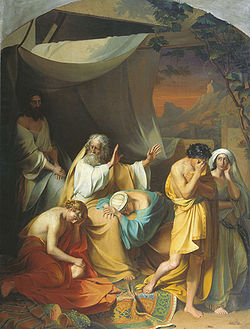
This painting, called "Curse of Ham", displays the story previously mentioned.
(Courtesy of Wikipedia)
Now, although almost everybody today agrees that slavery is not justifiable, there are still groups, such as white supremacists (specifically "white nationalists" in the article I discuss), that justify their racist ideology with religion, just like those who justified slavery hundreds of years ago. This article discusses how the author of a recently released book, Blood and Faith: Christianity in American White Nationalism, believes that Christianity still has a sinister connection with the mindsets of white nationalists.
The author, Dr. Damon T. Berry, says that in more recent history, groups like the KKK and other white supremacist groups have used information from the Bible to back up their racist and discriminatory views. Such evidence includes how the Bible says Jews descended from Cain, who murdered his own brother, or how they use "...the Tower of Babel, as scriptural evidence that God wants racial segregation." These are racist groups that still exist today. This modern-day behavior is not much different from that of supporters of slavery a long time ago.
One current event that received tremendous amounts of attention was the event in Charlottesville, Virginia, where a white-supremacist rally was taking place. A car ran into the crowd and killed Heather Heyer, a counter demonstrator who was fighting against white supremacy.
 The car ran into the crowd, injuring many. (from Time.com)
However, Dr. Berry describes that many of the white nationalists present at the rally were chanting "Jesus is our white savior" and "all religions will lead to race suicide". This shows the influence that religion still has on some of the racist groups that exist today.
The ideas that Aronson describes in his book pertaining to the connection between racism and religion may seem ridiculous and very outdated, but we are still dealing with them today in current events. For me personally, it is very disheartening to see this behavior connected to the Bible that I have grown up knowing and appreciating. I have always been taught that Jesus loved everyone, and considered everybody equal. The fact that one misinterpretation of a simple story in the Bible lead to the horrible racism that is still alive and well today is equally depressing and interesting to me. I am interested to see if Aronson continues to develop this connection between racism and religion as the book goes on.

Hi Meg!
ReplyDeleteI appreciate the ethos you established in talking about your own experience with Christianity and the Bible. In my blog post, I didn't feel comfortable exploring the topics of Ham and the Bible because of my lack of knowledge in that area. Your discussion of the white-supremacist rally in Virginia made perfect sense with what we read about in this section of the book. I remember seeing that very event on tv and how terrifying it was. It seems more difficult to find this information, but I was wondering if you came across any groups that expressed similar racism but weren't focused on white-supremacy. I look forward to reading your next blog posts!
Hi Clara-
DeleteWhile I was researching an example of religion tied to racism, I did try to find groups other than white supremacists, but I couldn't really find any other solid examples. I guess that's a good thing, though!
Hey Meg,
ReplyDeleteI really liked your post about how religion was tied to ideas of race and how it supposedly justified slavery. I've always found it very interesting how people use overall peaceful religions to justify violent or cruel acts, such as slavery or acts of terrorism in the name of the Koran. Even though I'm not particularly religious, and probably consider myself agnostic, obviously we were raised in the same church and I remember everything that was taught to me was about loving others and being kind. It's crazy to me that followers of the same religion could have been taught such different lessons under the same faith. One thing that's interesting about all texts in general is that it's somewhat up to interpretation from the reader, which leads for many interesting discussions in regards to passages in the bible and other sacred texts. What do you think should be done about people who use religion to justify various acts of cruelty, such as Jihadists who use the Koran to justify terrorist attacks? Do you believe in taking the bible literally for what is says, or do you think that it's open to interpretation and shouldn't dictate the way people live their lives? How do you think this idea of using religion to justify race relations contribute to our society now besides white nationalists?
Hi Bekah-
DeleteI'm not sure about what I think should be DONE with people who justify their acts of cruelty with religion; I personally do not consider a story or vague quote from a religious text justification for violence. I definitely believe that the Bible is open to interpretation, and although I guess it is not a bad thing for the Bible to have an influence on someone's life (in a positive way of course), I don't think it should ever completely dictate one's life. Other than the white nationalist groups, as I explained to Clara above, I could not find much solid evidence of other contributions that religion has tied to racism. I take this as a good sign.
Your link between what happened in Charlottesville and the use of religion to justify racism historically was very helpful. Don't forget to cite your images.
ReplyDelete